The cafe and bakery environment presents a unique menu design challenge. Unlike traditional restaurants where the menu is the sole source of information, a bakery menu must operate in tandem with a physical display case. The visual appeal of fresh pastries, breads, and cakes does the heavy lifting for food sales; the menu board's primary job is to clarify the beverage program, communicate pricing, and facilitate add-ons.
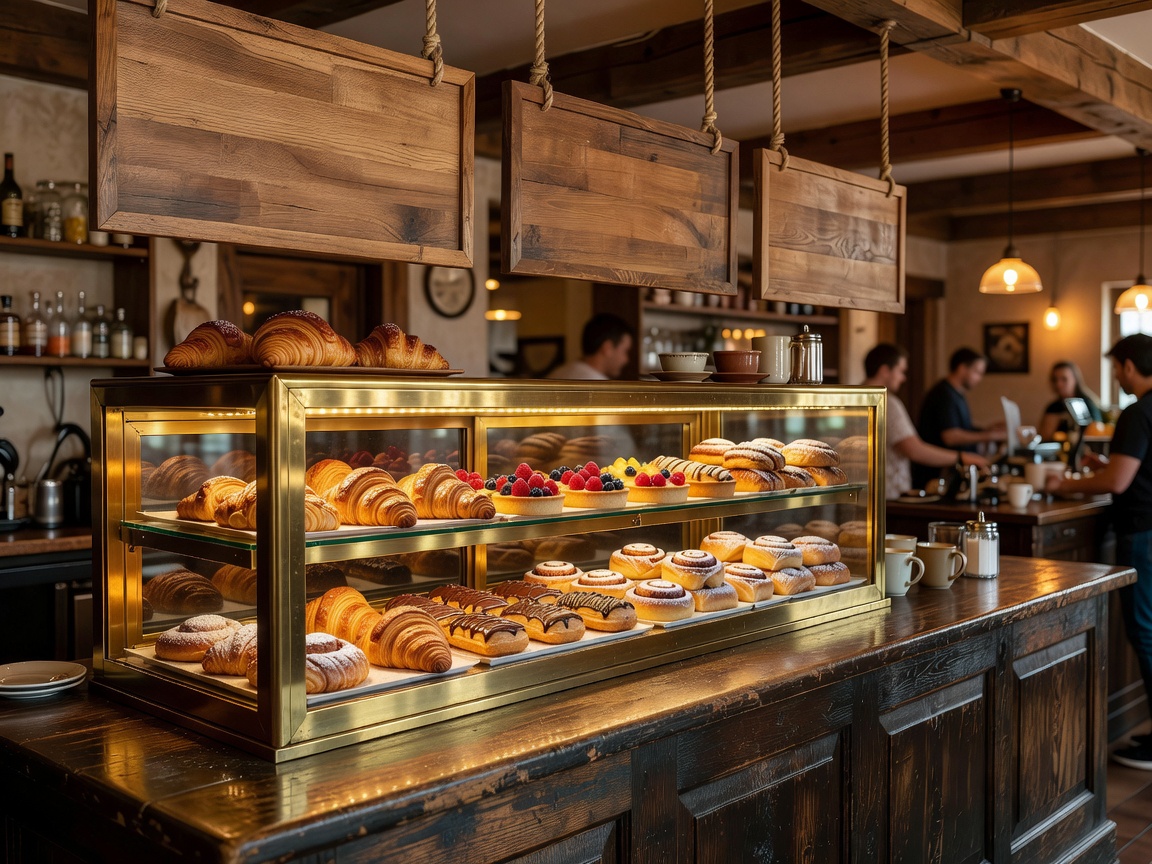
Synergy with the Display Case
Because customers eat with their eyes, the physical layout of a bakery naturally draws attention downwards to the glass display. A well-designed menu board, usually positioned overhead or on the back wall, must complement rather than compete with this. For food items, the menu should largely serve as a pricing legend. Instead of describing what a croissant is, the menu simply confirms the cost, perhaps highlighting specialty items that cannot sit in ambient cases (e.g., hot breakfast sandwiches made to order).
To bridge the gap between the menu board and the case, physical placards within the display are essential. These small, elegantly designed cards should carry the same typography and branding as the main menu, providing allergy information (V, GF, DF) and brief flavor profiles directly next to the product.
Structuring the Beverage Program
In most cafes, coffee and tea provide the highest profit margins. The menu must decode specialty coffee nomenclature for the average consumer without patronising the aficionado. Breaking beverages into logical categories is crucial:
- Black: Espresso, Americano, Filter, Cold Brew
- White: Flat White, Latte, Cappuccino, Cortado
- Not Coffee: Matcha, Chai, Hot Chocolate, Loose Leaf Teas
This categorization removes friction. Rather than presenting a wall of text, the customer immediately filters down to their preferred style. Furthermore, modifiers—such as alternative milks (oat, almond, soy) and syrups—should be clearly boxed out in a dedicated "Customise" section, ensuring staff do not have to repeatedly verbally explain the options.
Dayparting and Seasonal Inserts
Cafes experience severe shifts in customer behavior throughout the day. The morning rush is entirely transactional, focused on speed and caffeine. By early afternoon, the atmosphere shifts to a slower, lingering crowd looking for lunch items or a sweet treat.
Menu design must adapt to this. Digital boards allow for seamless dayparting, but if using static boards, operators often utilise physical inserts, clips, or reversible hanging panels. Flipping a panel at 11:30 AM to hide breakfast wraps and reveal toasted paninis helps focus the customer's attention on what is actually available, avoiding queue-stalling inquiries.
Highlighting Loyalty and Subscriptions
Finally, cafes rely heavily on habitual, daily customers. The menu board is prime real estate to advertise loyalty programs, coffee bean retail bags, or subscription services. These should be visually distinct from the core menu items—perhaps utilizing an accent color or a specific branded badge—placed near the point of sale where the customer has a moment of dwell time while their card processes.
Conclusion
Effective cafe and bakery menu design is all about balance and spatial awareness. By allowing the physical pastries to sell themselves, operators can dedicate their menu real estate to streamlining the highly profitable beverage ordering process, clear pricing, and driving recurring revenue through retail and loyalty promotions.